International Women's Day 2026: Clare Linton
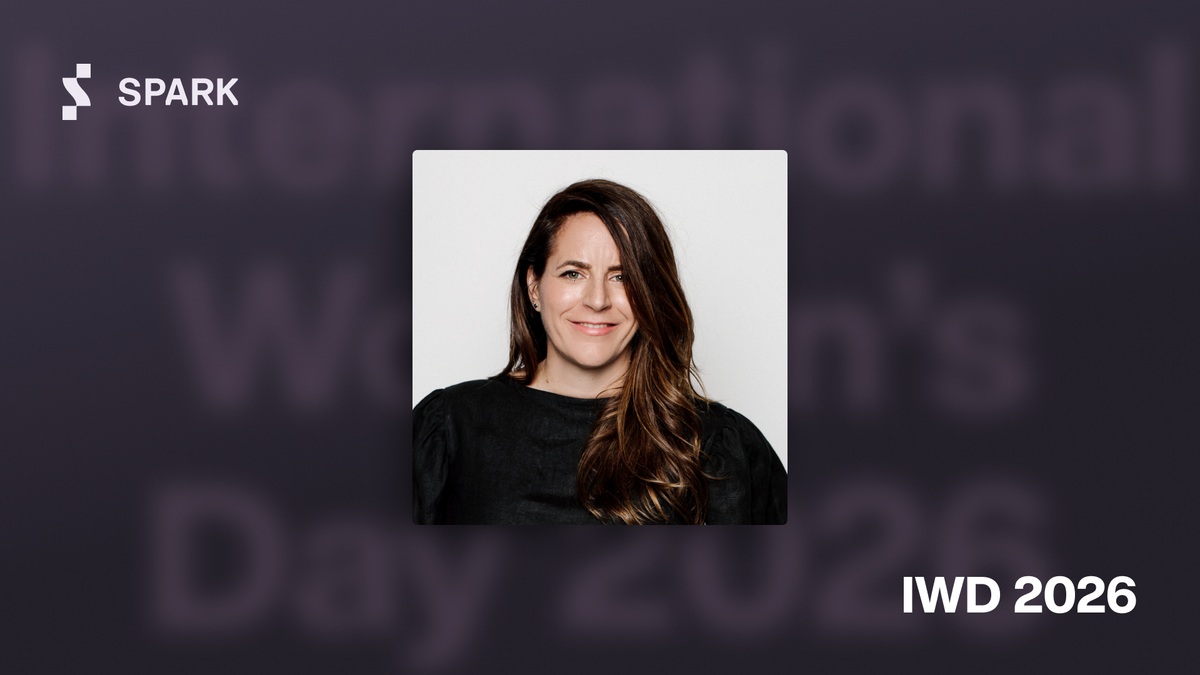
A veteran of the real estate industry, Clare Linton is the Vice President of Marketing at Alabaster Homes and Pavilion Cowork. Clare got her start with Rennie as a sales coordinator and worked her way into their head office, all the while competing as a member of Canada’s national field hockey team. After a number of years broadening her experiences beyond real estate, she returned to the New Development and coworking industries in 2017. We sat down with Clare to discuss how Vancouver’s Olympic Village development shaped the rest of her career, the biggest trend expected to emerge from this slow market, and the importance of choosing your own path to success.
How did you get your start in the industry?
I started my career back in 2004 at Rennie, essentially straight out of university and spent eight years there. I had gone to university in Calgary, and I decided I was moving back to Vancouver. The real estate market was booming, and Rennie was making a lot of noise with some of the big projects they were a part of. I ended up getting a role there and was working on sites as a sales coordinator to start. This really helped me get a better understanding of the industry because I had no real background in real estate at the time. From there, I worked my way from a sales coordinator to working in the head office.
Can you share a defining moment or real estate project in your career that shaped you today?
In my time at Rennie, I got the opportunity to work on Olympic Village, which was originally known as Millennium Water. I was still a project coordinator at the time, and it was really fascinating because there were so many different layers and challenges with that project. From hitting a downturn in the market to receivership to negative press, there were all these different things that I don't think you would ever necessarily expect to experience in a single project, especially with a master plan community.
But it was also this incredible community that has transformed an entire neighbourhood in the city that is very prominent and so desirable. While we knew that would be the case, we still had to pivot and figure out how we were going to approach it, which included a full rebrand midway through. It gave me so much knowledge and understanding of how to approach a project and real estate as a whole.
What is one piece of advice you would give to someone who’s struggling to carve out a space for themselves in this industry?
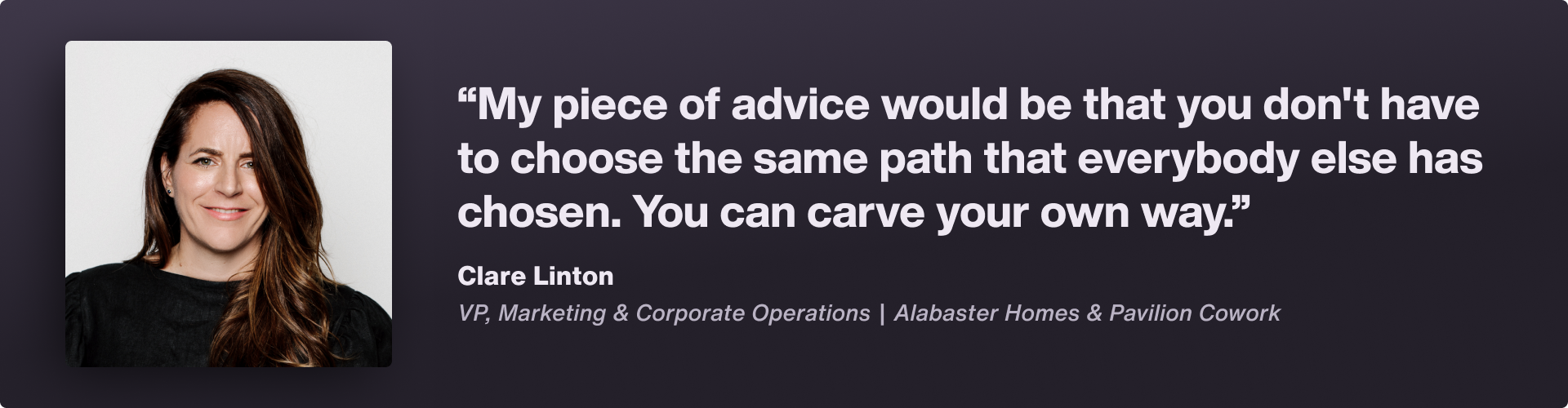
My piece of advice would be that you don't have to choose the same path that everybody else has chosen. You can carve your own way. I think that a lot of people see successful people and think, "Oh, you did it this way, I’m going to mimic that.” But I think what’s more important is to understand what your strengths and interests are. Then, with the right group and the right role, you'll figure out what you want to be focused on and the right path for your career.
What personality traits or experiences of yours do you think have contributed to your success?
For me, I don't think it's any one thing, but instead a few things. I think I was always quite confident and hardworking, which are really important in this industry. I was very much a team player and collaborative, which came from my background in sports. I also think another trait that’s really contributed is being nimble or adaptable. Anybody in the industry knows that nothing ever goes to plan or stays the same. Being able to identify that you need to make a change and then make it in a quick manner is super important. I think all these things have really helped me throughout my career.
Did you ever have a key mentor throughout your career? What was the most valuable thing you learned from them?
I didn't have one specific mentor where I was like, "Oh, you're my mentor." But I think that one that comes to mind is my director during my time at Rennie, Linda Broda. She really shaped how I looked at project marketing. She emphasized the need for creativity, attention to detail, for your product to stand out and, like I said before, to be nimble. She really instilled these important values in me and everybody on our team. I think that looking back at all the people who were on our team and how successful and far each has gone is very cool to see.
With the current market being slower, we’ve seen teams go towards a variety of different directions, from offering large incentives to pausing developments as a whole. What trends do you expect to see from developers and home-sellers to adapt to the state of the market?
I think that the biggest trend I see is the behind-the-scenes sales processes tightening up. In a simpler or easier market, the entire customer journey hasn't been a priority because you have a much higher conversion rate. With today’s lower conversion rate, making sure that your entire customer journey is completely dialled in is where you're going to win. It’s about focusing on the details versus making big swings. It’s about focusing on creating the right product in the right location and really honing in on those key details because it is a way more difficult market right now.