International Women's Day 2026: Sara Park
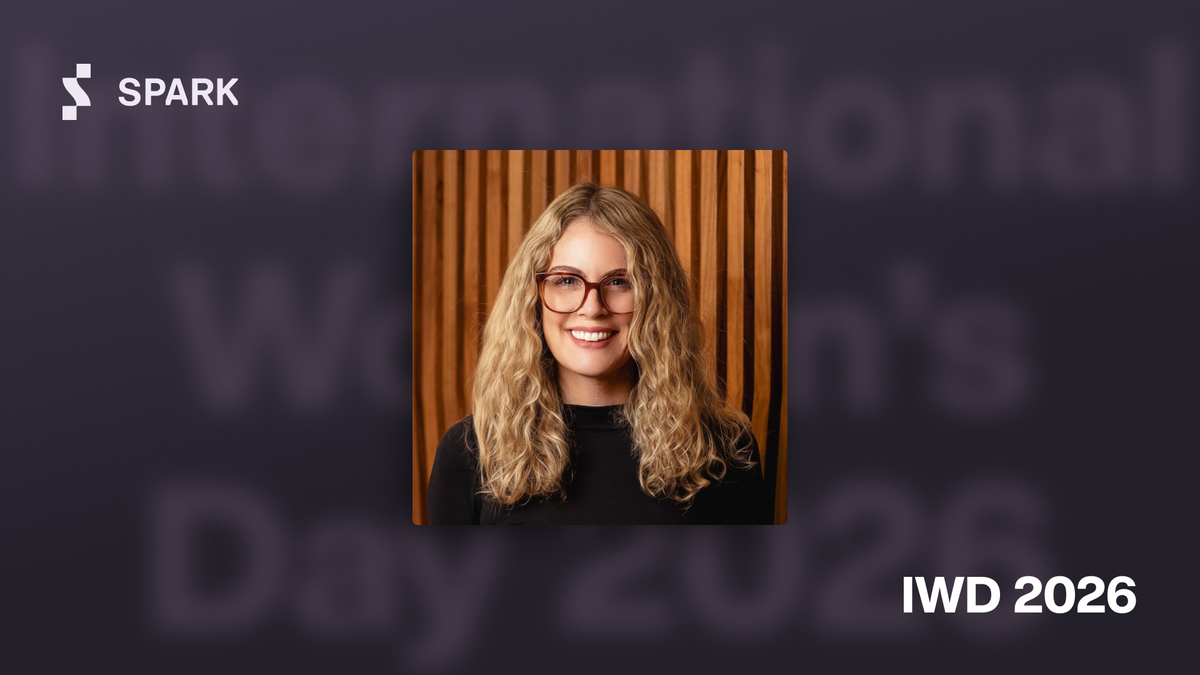
A dedicated mother and strong leader, Sara Park is the Director of Marketing at PATH. Sara began her career in commercial real estate and made the transition to residential real estate in 2019, now primarily focusing on the marketing and sales for master planned communities. We sat down with Sara to discuss how motherhood led her to the happiest point of her career, how the industry can become more equitable for women, and how a tougher market can be a blessing in disguise.
Can you share a defining moment or real estate project in your career that shaped you into who you are today?
A few years ago, I was on maternity leave and when you're on maternity leave, you have a lot of space to reflect about what you really want in your career. There's a lot of quiet time on maternity leave – well, not so quiet actually (laughs). But as any mom knows, there's a lot of time to reflect. I determined at that moment in time that I had a calling to market masterplanned communities, and that was something that I really wanted to do. I had been watching PATH and the Royal Bay project in Victoria for years. I had heard great things about the company and decided to make it my mission to work for them.
I kept reaching out to the President and Vice President of Development. I think I reached out probably five or six times inquiring about a marketing role. This was such a defining moment for me where it would have been easy to give up, but I didn't. I was super persistent, and finally, one day I heard back from the President, Jason Zaytsoff, letting me know they were ready to move forward with hiring for a marketing role and the rest is history. I started working for PATH and it's the happiest I've ever been in my career.
What personality traits or experiences of yours do you think have contributed to your success?
I would say I'm very relational. I really care about people. I care about my team, the Realtors we work with, our buyers and my peers. I think that's helped me build trust and long-term relationships, which I believe are so important, especially right now. I'm not just chasing leads or transactions but rather focusing on building relationships, always.
Another thing is that I come from a commercial real estate background where the customer experience matters a lot. In a previous role, I worked for a developer who believed that every single touch point counted - how someone was greeted upon entry, how a space felt, the follow-up email, every touchpoint had to be dialed. I think that training and discipline shaped who I am and where I am, and I’m super grateful to have been exposed to that early in my career.
With the current market being slower, we've seen teams go towards a wide variety of different directions, from offering larger incentives to pausing developments as a whole. What trends do you expect to see from developers and home sellers to adapt to this current state of the market?
I think we've reached a point where incentives are saturated in the market. Buyers are seeing right through them, and I expect that we'll see a lot less in 2026. I believe developers will start to really double down on their buyer experience and product quality. Stronger communities. Better design. More thoughtful marketing. Relying more on referrals and long-term relationships rather than quick wins. I actually feel the slower market has weeded out the developers who didn't have strong fundamentals. It's healthy for the market. Overall, a slower market makes the work more challenging but also more fun, and we have seen and will continue to see some really good results out of it.
Are there any insights or observations you've identified recently that give you optimism for the future of new development real estate?
One, I'm optimistic that I'm seeing a lot more strong women in development. I think that's super encouraging. Two, we’ve started to see some of the best work come out of a really tough market. It's not easy or simple to sell homes in this market. It forces all of us to ‘level up’, so to speak, and so I've seen a lot of my peers doing really awesome, creative work. We've experimented at PATH with different marketing tactics this year, some of which have failed miserably but some have been quite successful.
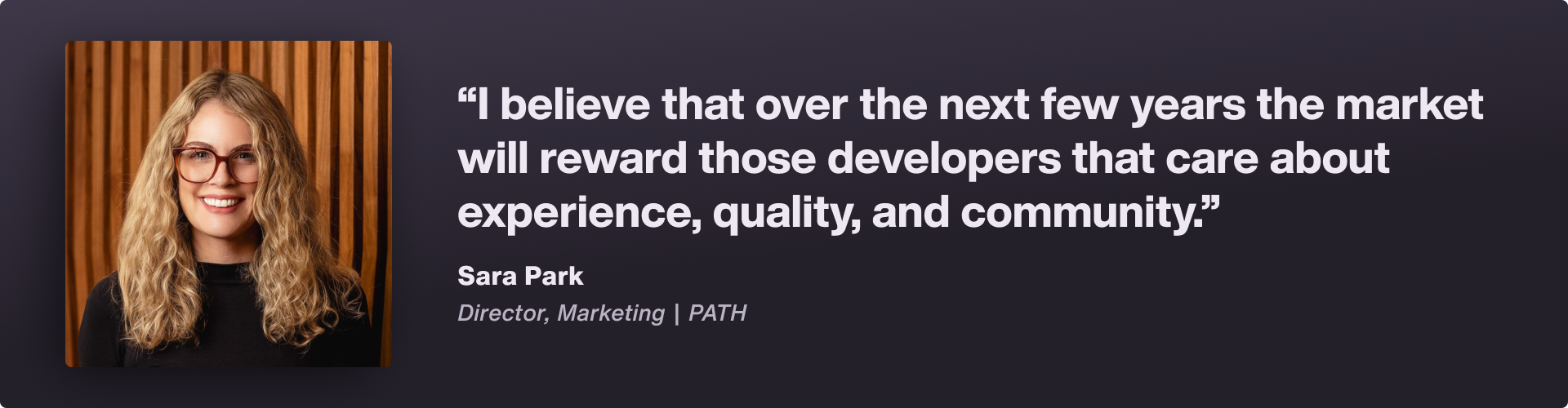
Politics will always change, policy will always be changing and shifting, but at the end of the day, we need housing. Our communities are growing, and I believe that over the next few years the market will reward those developers that care about experience, quality, and community.
Did you have any key mentors, and what was the most valuable thing you learned from them?
I've had several incredible mentors. I'm so lucky in that regard. But one mentor that I feel is quite relevant to the ‘Give to Gain’ theme is Kim Ficocelli. I worked at CF Pacific Centre, a shopping centre in downtown Vancouver. Kim was General Manager at the time, and let me tell you, she was superwoman. Despite having two young kids at home, she would literally run to work from North Vancouver to downtown every single morning. She was the fiercest leader. She advocated for her team. She never missed a detail. She was firm but fair. She was also one of the most stylish people I have ever met.
I think what impacted me the most is that she showed me that leadership and motherhood are not mutually exclusive. You can be ambitious, but you can also be a nurturing mother. That has really stayed with me, given that I am now a mom. I often think, ‘what would Kim do in this situation?’
This year's IWD theme is ‘Give to Gain’. From your years of experience in the real estate industry, what do you think are some key efforts the industry can offer to open the door to more equitable opportunities for women in this space?
Equal representation in leadership. I do think we're getting closer. At PATH, we've really focused on that, and I appreciate that our executive team is always conscious of this. But there's still work to be done in the industry as a whole. The other thing I always come back to is that women drive the majority of purchasing decisions — in many households, up to 70 percent. And to me, this means women should absolutely be shaping the strategy, the product, and the messaging behind what we build. Inclusive design isn’t just about representation at the boardroom table, it’s about empathy on the ground.
Finally, when I heard the theme of ‘Give to Gain’, mentorship immediately came to mind. I've been lucky enough to have had many mentors throughout my career, as I mentioned earlier. I believe when women share rooms, share their contacts and advocate for one another, the entire industry benefits.